Leads, orders, projects, cash and expenses in one open-source business system.
Change it with AI when your business changes. Let your own AI agents work in it with each user's permissions.
Six apps
Everyone opens the app for their job. Sales is always there; an administrator can switch the other five off.
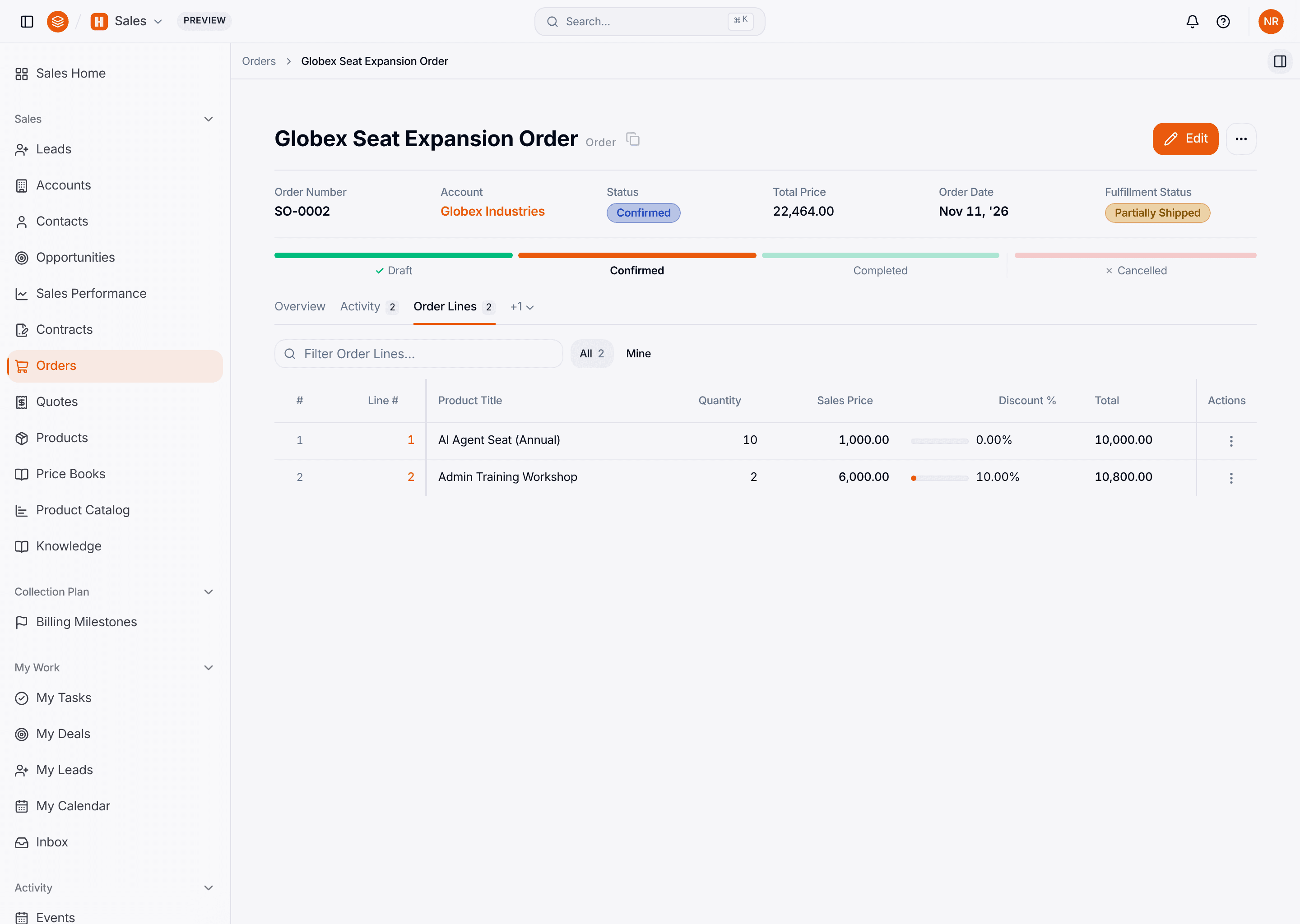
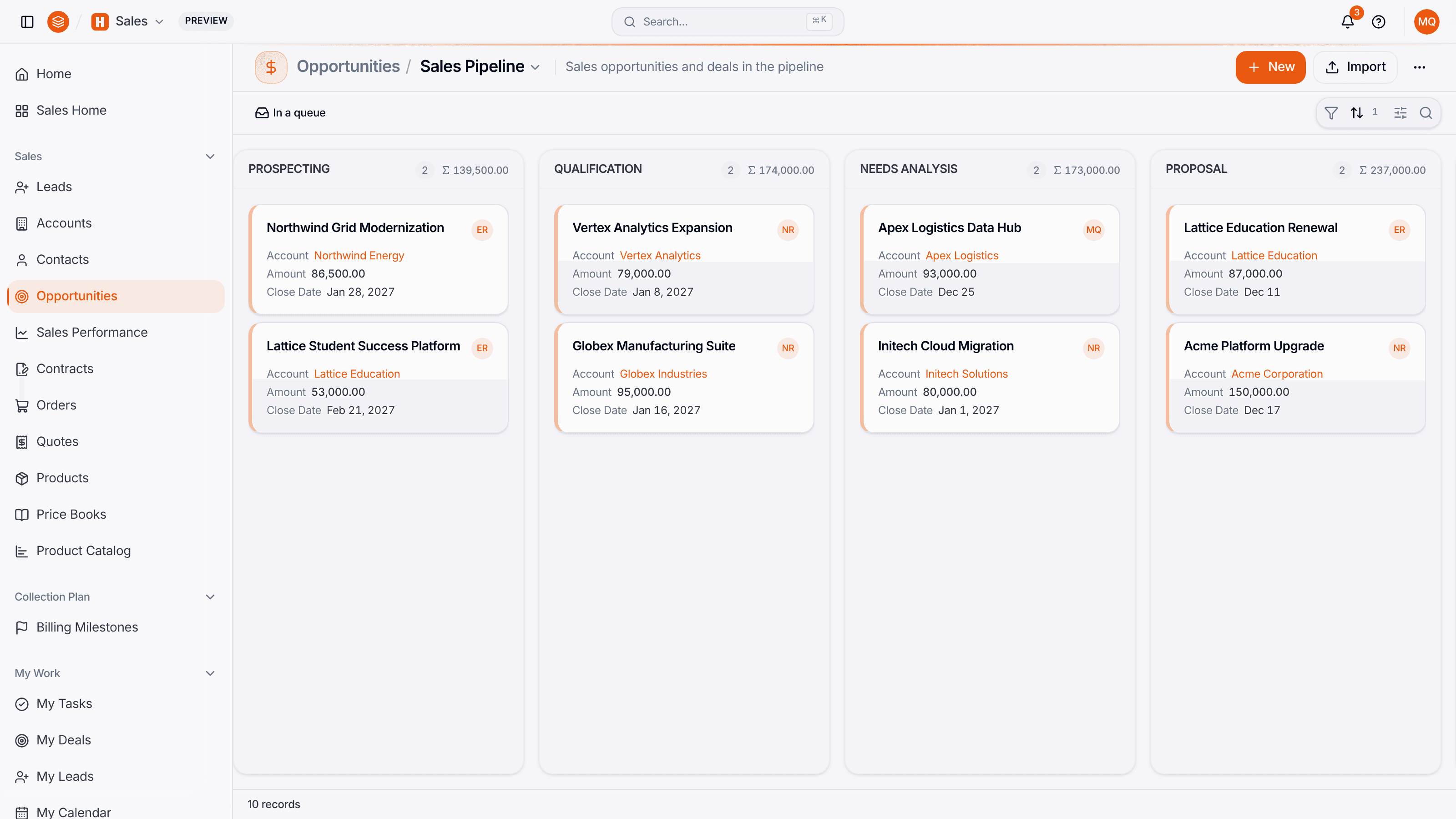
Sales
For · Sales reps and managers
Leads, accounts, opportunities, quotes and products, orders and contracts.
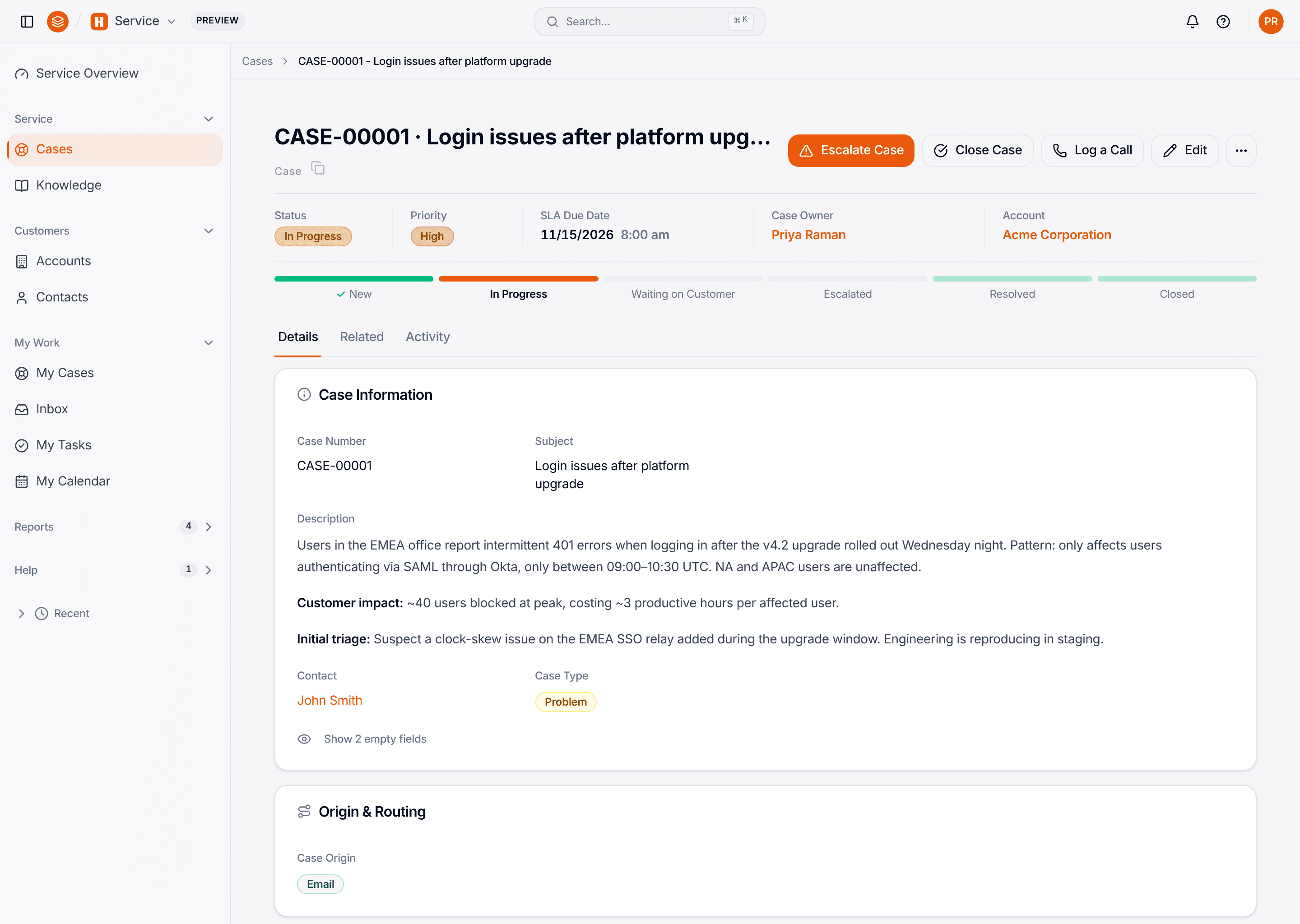
Service
For · Service agents and managers
Cases with SLAs and escalation, and the knowledge base.
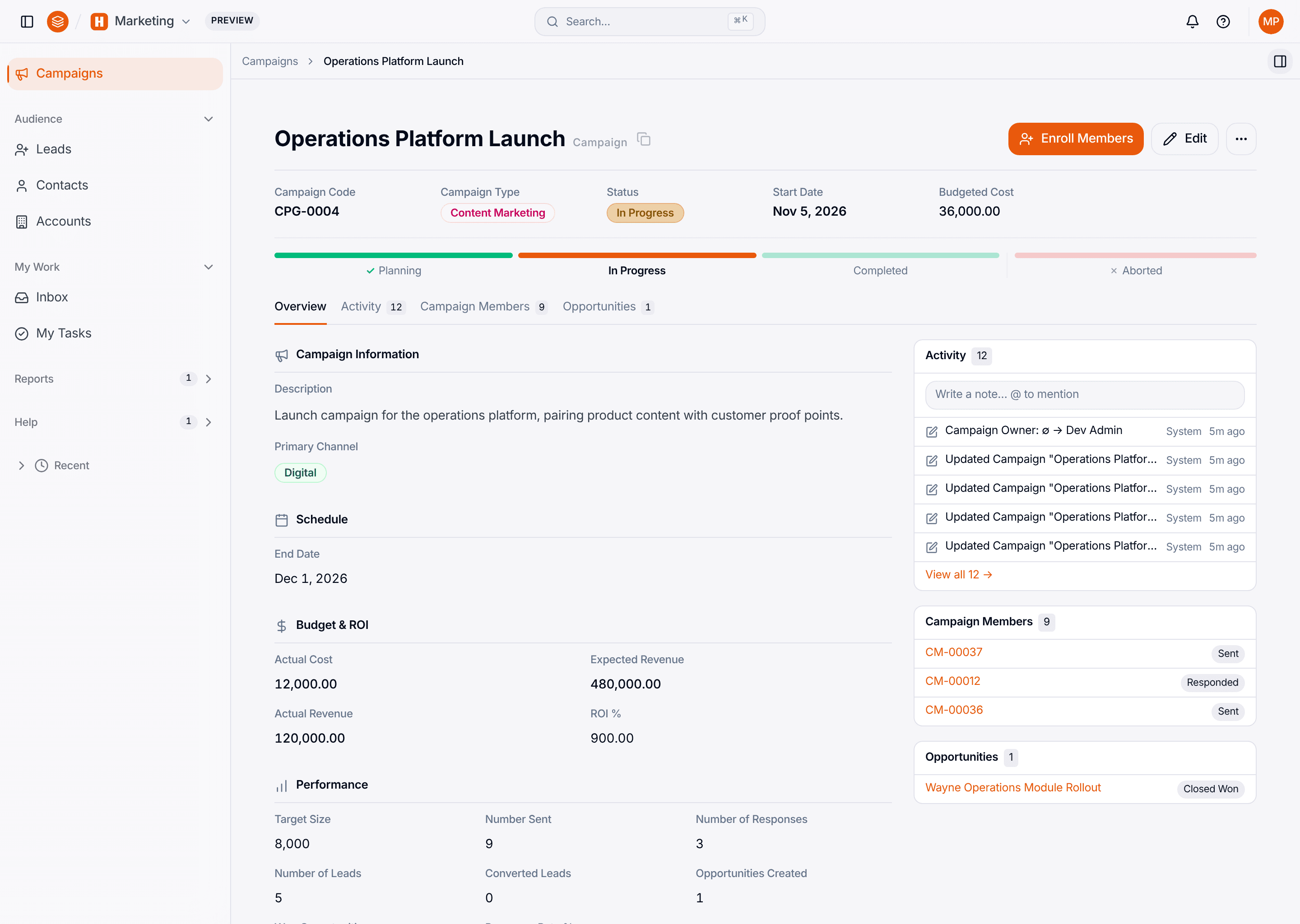
Marketing
For · Marketers
Campaigns, and the leads and contacts they reach.
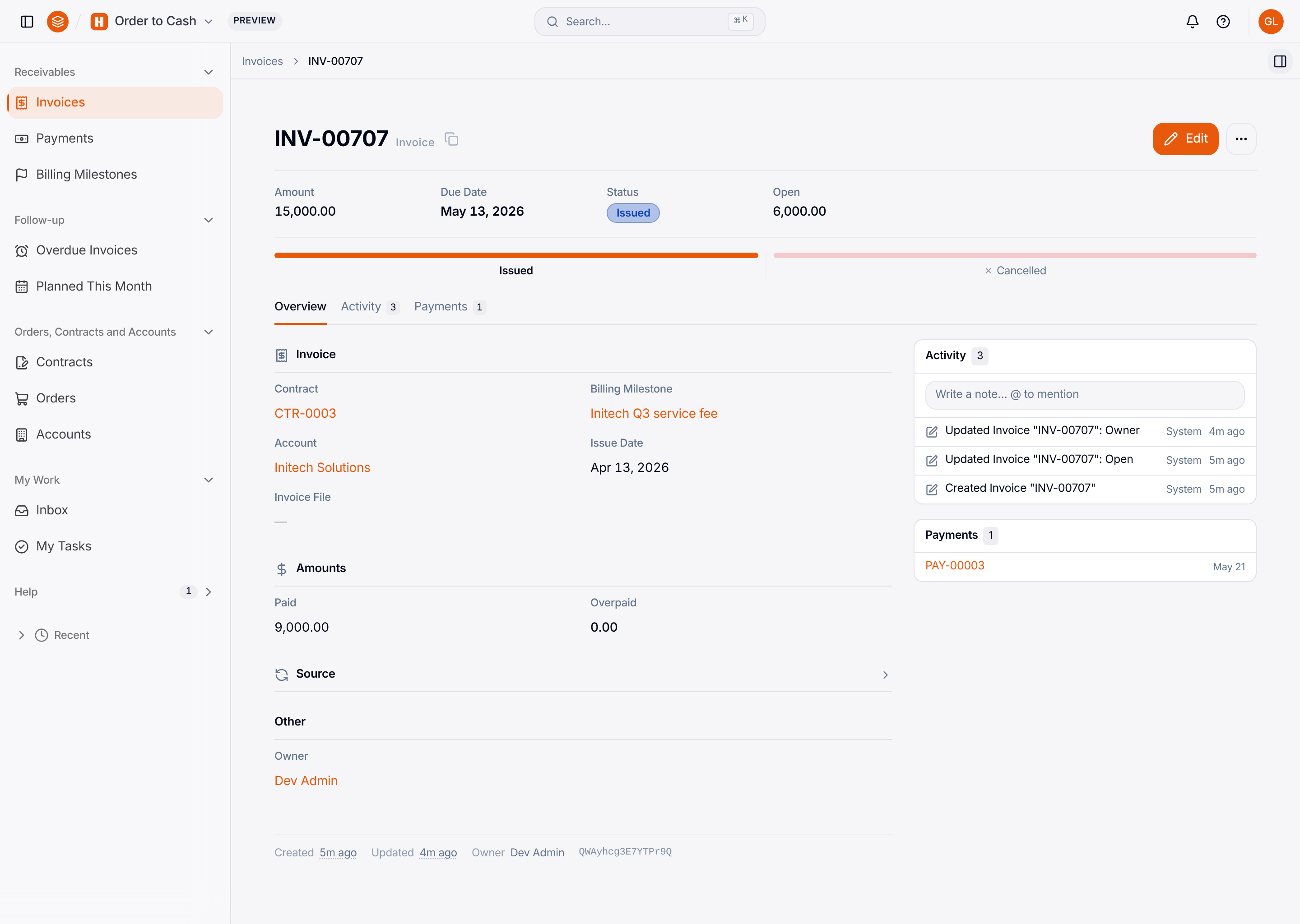
Order to Cash
For · Finance
Each account's collection plan, and its invoices and payments with or without a contract.
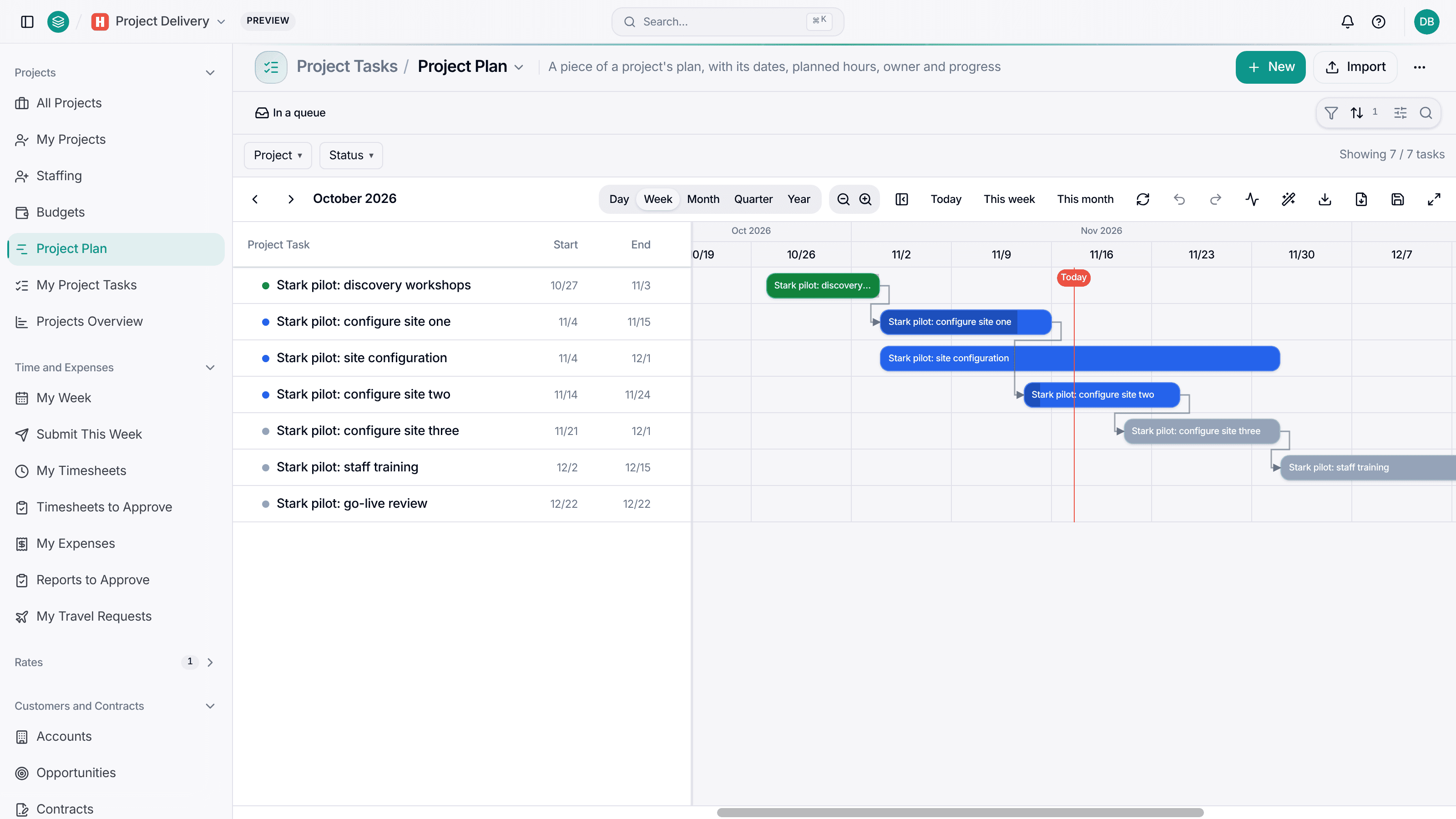
Project Delivery
For · Project managers, consultants and finance
Projects, staffing, plans, timesheets and budgets, with cost and margin.
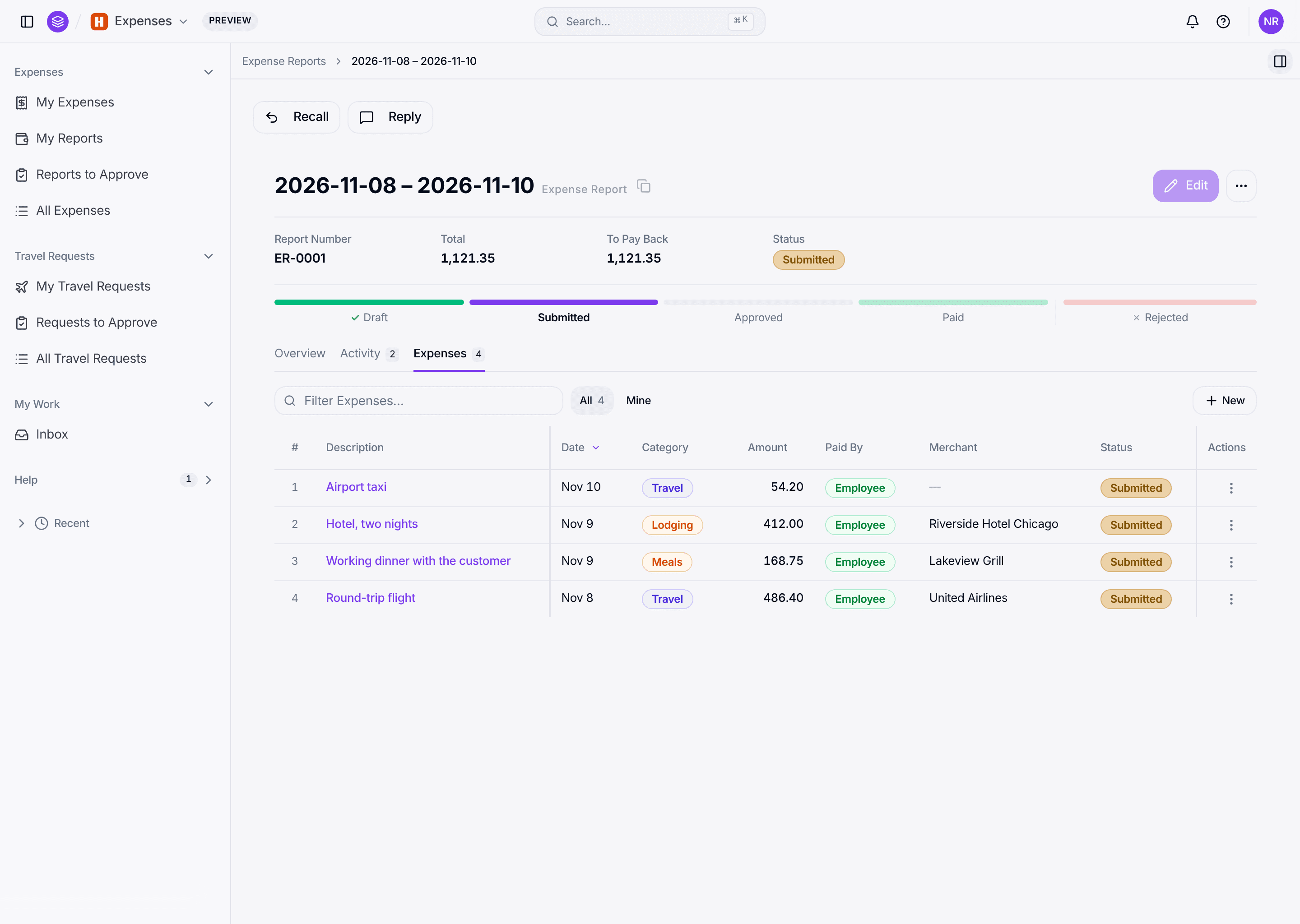
Expenses
For · Every employee
Expenses with their receipts, expense reports, travel requests and their approval.
Three sample scenarios
Each walks one kind of business end to end, and marks plainly what is not shipped.
AI and agents
The business definition is data
Objects, fields, rules and screens are metadata in a Git repository. An AI coding agent changes them, and the tables, the API and the screens follow.
Customize and extend →Your agent works with your permissions
Every object is open over MCP. An agent signs in as a person and can do what that person can do, nothing more.
Connect your agent →No built-in assistant
The community edition runs no assistant of its own: you connect yours. HotCRM ships eight skills for the platform assistant, where an environment runs one, and opens nine actions to agents, among them Convert Lead and Submit for Reimbursement. An action that cannot be undone, or sends to an approver, asks the person first.
Actions open to agents →What it is not
HotCRM keeps no general ledger, calculates no tax and runs no payroll. It records orders, invoices, payments and expenses, and works beside your finance software, which stays the books.
Boundary with finance software →Open source, and yours to run
- HotCRM and ObjectStack, the platform under it, are both Apache-2.0.
- Run it on your own servers, or install it into an ObjectStack environment from the marketplace.
- Switch off the modules you do not use. Nothing is deleted, and switching one back on brings it back as it was.
Run it locally
git clone https://github.com/objectstack-ai/hotcrm.git && cd hotcrm
pnpm install
pnpm dev
Then open http://localhost:4001. The first start loads the demo data.
For implementation partners and developers
A partner fits HotCRM to a customer in a clone of the repository: configuration first, then changes made with a coding agent and checked by pnpm verify, delivered as the customer's own deployment.